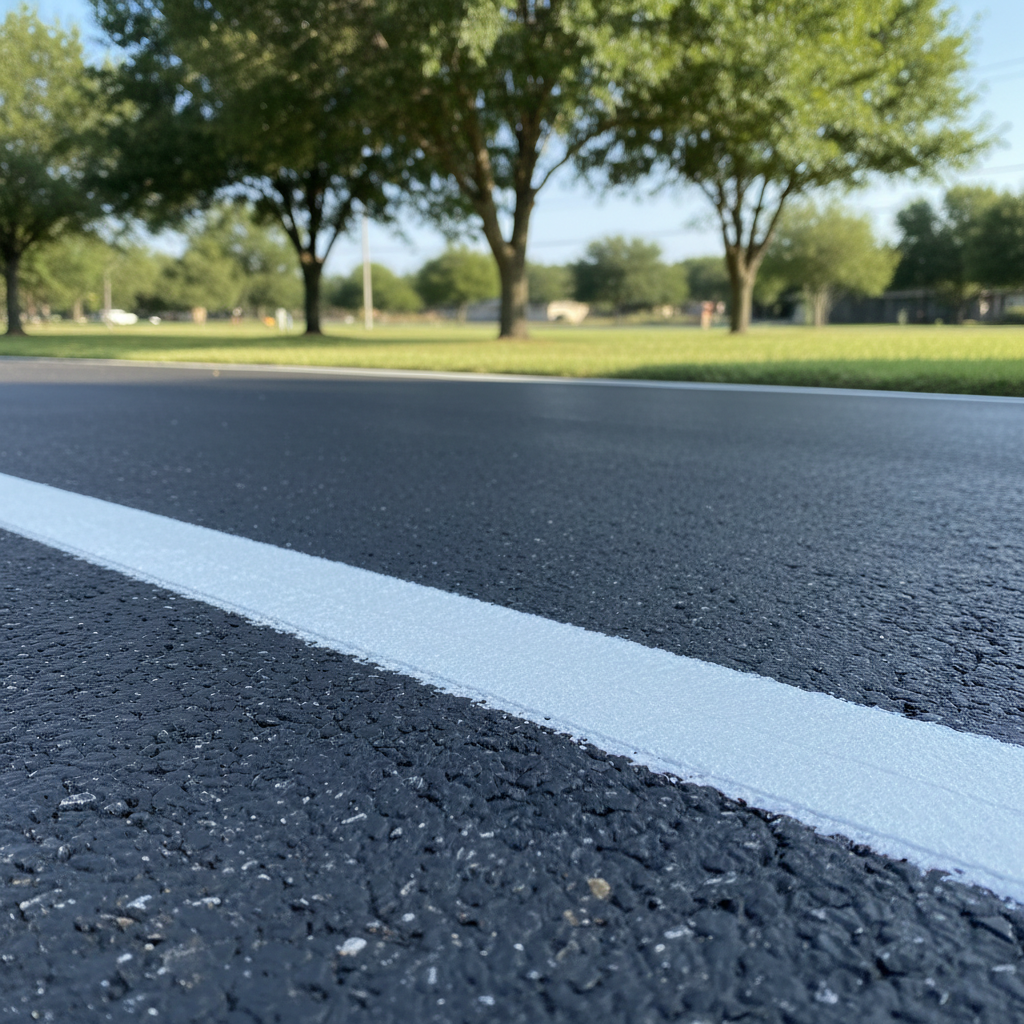
Why bother striping my residential driveway or private parking area? It's not a public lot, right?
You're right, it's not a public lot with traffic flow and ADA requirements, but that doesn't mean striping doesn't have a place at home. For residential driveways, especially longer ones or those with multiple parking spots, striping adds a lot of curb appeal. It makes your property look neat, organized, and well-maintained. Think about it: clear lines define parking spaces, guide visitors, and just generally make things look tidier. If you've got a small business with a private parking area, even if it's just for your employees, clear striping helps maximize space and prevents parking chaos. It's a small detail that makes a big difference in how your property presents itself.
How long does asphalt striping actually last in our Bryan weather?
That's a question I get a lot, especially with our Texas sun beating down and the occasional heavy rains. Generally, good quality asphalt striping, done with the right paint and proper application, should last anywhere from 1 to 3 years. Now, that's a pretty wide range, and there are a few things that influence it. The biggest factor is traffic. A residential driveway that sees a couple of cars a day will hold up much longer than a small business lot with constant vehicle movement. The type of paint matters too; we use durable, traffic-grade paints that are designed to withstand UV rays and moisture. And, of course, the condition of the asphalt underneath plays a role. If your asphalt is cracking or crumbling, the paint won't adhere as well or last as long. Here in Bryan, the intense summer heat and UV exposure are probably the biggest enemies of striping longevity, so we always recommend a good, thick application.
What kind of paint do you use for striping? Is it just regular house paint?
Absolutely not. You can't just slap on some exterior house paint and expect it to hold up to vehicle traffic, oil drips, and our weather. We use specialized traffic paint, often called pavement marking paint. There are a few different types, but for most residential and light commercial jobs, we're using acrylic latex traffic paint. These paints are formulated to be extremely durable, quick-drying, and resistant to abrasion, chemicals, and UV degradation. They're designed to adhere strongly to asphalt and concrete, and they come in vibrant colors that stay visible for a long time. Some even have reflective beads mixed in for better night visibility, though that's more common for commercial lots. The key is that it's built for the job, not for your living room wall.
Can you stripe over old, faded lines, or does it need to be a completely fresh surface?
Most of the time, yes, we can stripe right over faded lines. That's usually the most common scenario we see. As long as the existing asphalt surface is in decent shape – meaning no major cracks, potholes, or crumbling – we can clean it thoroughly and apply fresh paint directly over the old. The new paint will cover the faded lines, making them crisp and vibrant again. Now, if the old lines are really thick and built up, or if the asphalt underneath is severely damaged, we might need to do a bit more prep work. Sometimes, if the old paint is peeling badly, we might recommend a light power wash to remove loose flakes before applying new paint. But generally, it's a straightforward process of refreshing what's already there.
How long does it take to dry? Can I drive on it right away?
This is a critical question, and the answer is usually 'no, don't drive on it right away.' The drying time for traffic paint is pretty fast, especially in our warm Bryan climate. Typically, it's surface-dry within 15 to 30 minutes, meaning it won't track if you lightly touch it. However, it needs more time to fully cure and harden. We usually recommend keeping vehicles off the freshly striped area for at least 1 to 2 hours, and ideally 24 hours for the best adhesion and durability. This allows the paint to properly bond with the asphalt and achieve its maximum strength. Driving on it too soon can cause tire marks, smudging, or even pull the paint off, which means we'd have to come back and fix it, and nobody wants that. We'll always let you know the specific drying times for your project when we're on site.
What's the process like from start to finish?
When you call Pacific Asphalt Paving for striping, here's how it generally goes. First, we'll discuss what you need – whether it's refreshing existing lines, adding new ones, or designing a layout for a new parking area. We'll come out to your property in Bryan, take a look at the surface, measure things up, and give you a clear, honest quote. Once we agree on the plan, we'll schedule the work. On the day of the job, our crew will thoroughly clean the asphalt surface to ensure the paint adheres well. This might involve sweeping, blowing off debris, or even a light power wash if needed. Then, we use specialized equipment – usually a walk-behind striping machine – to apply the paint precisely according to the agreed-upon layout. We're careful to use stencils for things like numbers or handicap symbols. After the paint is down, we'll advise you on the drying times and when you can safely use the area again. It's a pretty efficient process, designed to minimize disruption to your home or business.
Does the type of asphalt surface matter for striping? Like, new asphalt versus old, or sealcoated versus unsealed?
Oh yeah, it definitely matters. The surface condition is huge for how well the striping paint adheres and how long it lasts. New asphalt, especially if it's been properly cured for a few weeks, is an ideal surface. It's clean, smooth, and the paint grabs onto it really well. Old asphalt can be fine too, as long as it's not too deteriorated. We'll need to make sure it's clean and free of loose aggregate or major cracks that would compromise the paint's bond. Sealcoated asphalt is a bit different. If it's freshly sealcoated, we usually recommend waiting at least 24-48 hours, sometimes longer, for the sealer to fully cure before applying striping. Applying paint too soon can cause adhesion issues or discoloration. The sealer provides a fresh, dark surface that makes the striping really pop, and it actually helps the paint last longer because it's bonding to a smoother, protected layer. Unsealed, older asphalt can be trickier because it might be more porous or have small loose bits of aggregate, which means the paint might not look as crisp or last as long. We always assess the surface before we start so we know exactly what we're dealing with.